The Minneapolis skyway is a network of indoor walkways one floor above the streets of downtown Minneapolis, so you can cross much of the city center without a coat. For families and groups visiting in winter, that makes a cold day much easier to plan. The catch is timing. City rules set long official hours, but Meet Minneapolis says most skyway-connected buildings are open only during weekday business hours and closed at weekends. This guide covers how the skyway grew, how to get in, what's inside and how to check hours before you go.
TLDR
- The Minneapolis skyway system reaches around 80 city blocks of downtown, according to Meet Minneapolis.
- City rules ask for longer hours, but most buildings keep their skyways open only during weekday business hours and close them at weekends.
- In July 2025, Guinness World Records gave the title of largest continuous pedestrian skyway network to a district in Riyadh, Saudi Arabia, measured at 15.46 km.
- You get in from the second floor of a connected building, and many elevators have an ‘SK’ button instead of 2.
- Check building hours on SkywayAccess.com or the Skyway.run map before you set out.
Ready to Plan a Winter Trip to Minneapolis?
Roami offers modern vacation rentals for urban group travel: fully furnished units, from studios to multi-bedroom apartments, in professionally managed buildings. We have stays in Minneapolis and in Saint Paul, with the comfort of a home and the consistency of a boutique hotel, booked direct with us. Check-in is at 4 PM and check-out at 11 AM. Our house rules cover quiet hours and everything else to know before you arrive.
Century Plaza, our Minneapolis building, is across the street from the Minneapolis Convention Center, and you reach the skyway through the convention center. Have questions about a stay for your group? Call us at +1-833-305-3535 or send us a message.
What Is the Skyway System in Minneapolis?
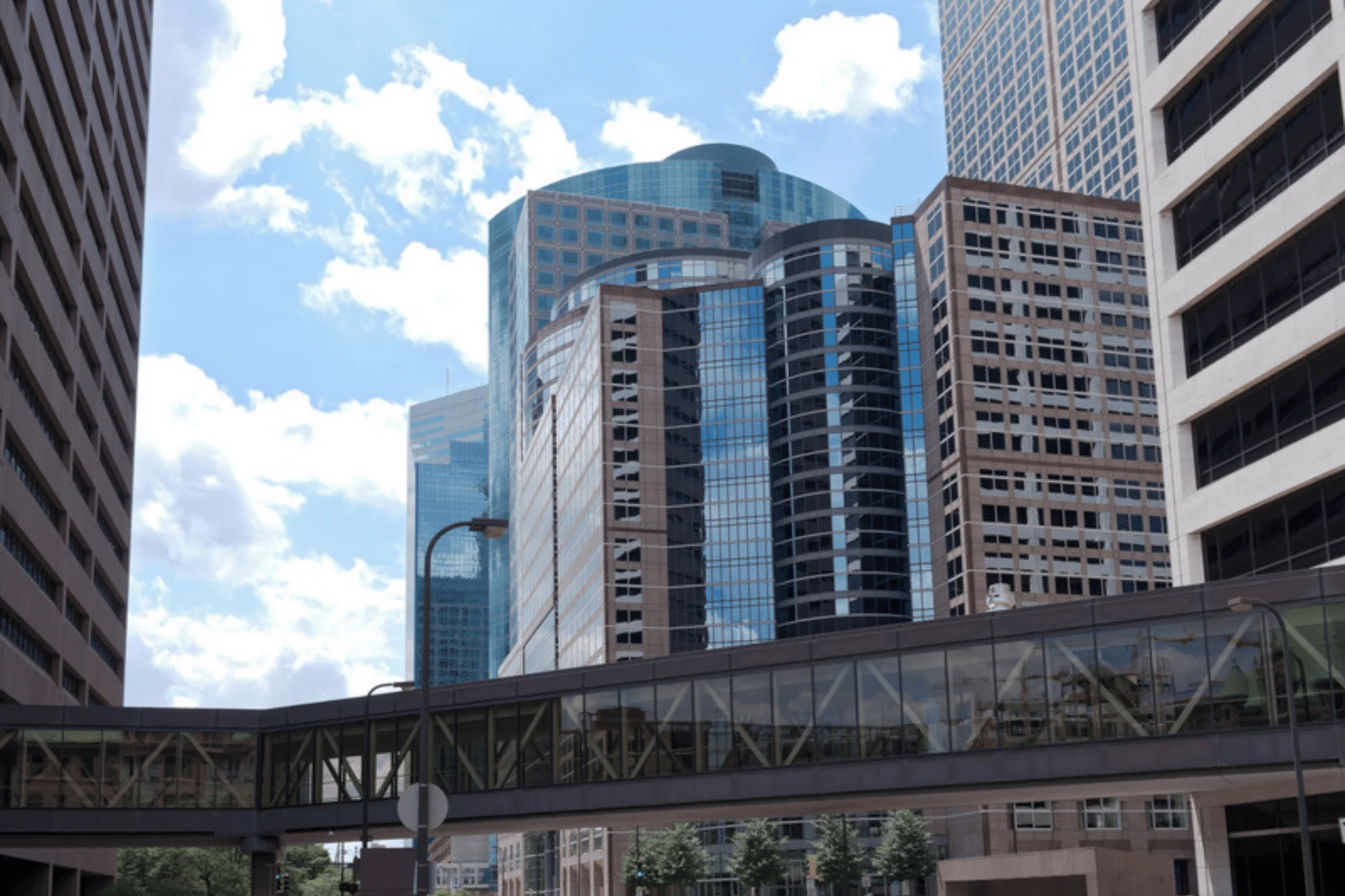
The skyway system is a web of climate-controlled bridges, corridors and tunnels that lets pedestrians cross the downtown core indoors. Meet Minneapolis describes it as the largest contiguous system of enclosed, second-level bridges in the world, with over 10 miles of pathways.
SkywayAccess.com, published by Urban Works, says the system connects more than 150 buildings in the central business district. With skyways connecting offices, shops and theaters, most of the walk runs through building lobbies and hallways rather than along one long corridor.
Because each bridge joins the second floors of two buildings, the route changes character from block to block.
Why Do the Length Figures Disagree?
Published lengths disagree mainly because the skyway keeps growing, and each source measured it at a different time. MNopedia, from the Minnesota Historical Society, gave over eight miles by the early 21st century. Meet Minneapolis says the total passed over 8 cumulative miles when the skyways linking U.S. Bank Stadium opened in 2016. The Hennepin History Museum gave over nine miles in 2019, and SkywayAccess.com now cites more than 10 miles.
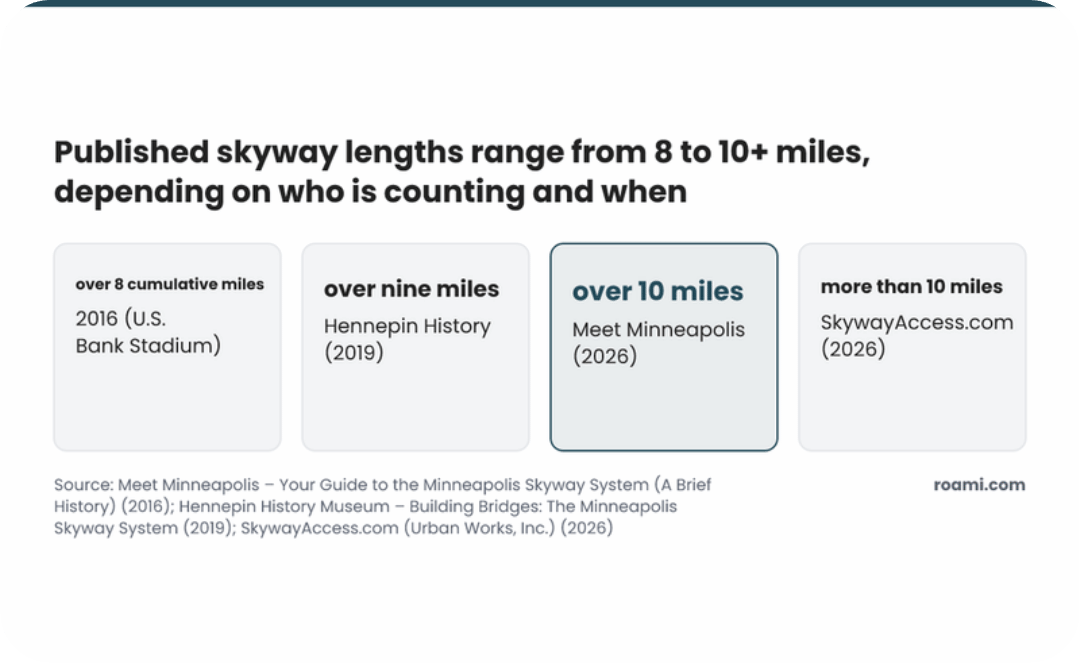
Read side by side, the figures rise with each new year rather than contradicting each other. For planning a walk, the exact total matters far less than which buildings on your route are open.
Is It Still the Largest Skyway in the World?
Not by the Guinness measure. In July 2025, Guinness World Records gave the title of largest continuous pedestrian skyway network to King Abdullah Financial District in Riyadh, measured at 15.46 km.
Minneapolis had claimed that record for years, and many travel pages still repeat it. Local sources now describe the network in other ways, such as its contiguous second-story design, so you'll see both claims online.
How Did the Skyway Network Grow?
The skyway's history starts in 1962, when developer Leslie Park and architect Ed Baker built the first bridge over Marquette Avenue, according to MNopedia. It linked the new Northstar Center to the Northwestern Bank Building. That first bridge is gone, demolished during construction of the Norwest Center, now Wells Fargo Center, Meet Minneapolis says. The oldest skyway still standing crosses 7th Street between the Northstar Center and the Roanoke Building, and it opened on June 12, 1963. Growth was slow at first. By 1972, seven skyways were in use downtown, but they did not connect to each other, MNopedia notes.
The IDS Center changed that. It was built with skyways in all four directions, which joined the scattered bridges into one system. Those links also tied the Marquette office district to the retail stores along Nicollet. By mid-1974, the skyways connected eight downtown blocks, from Fifth to Ninth Streets and from Nicollet to Second Avenue South.
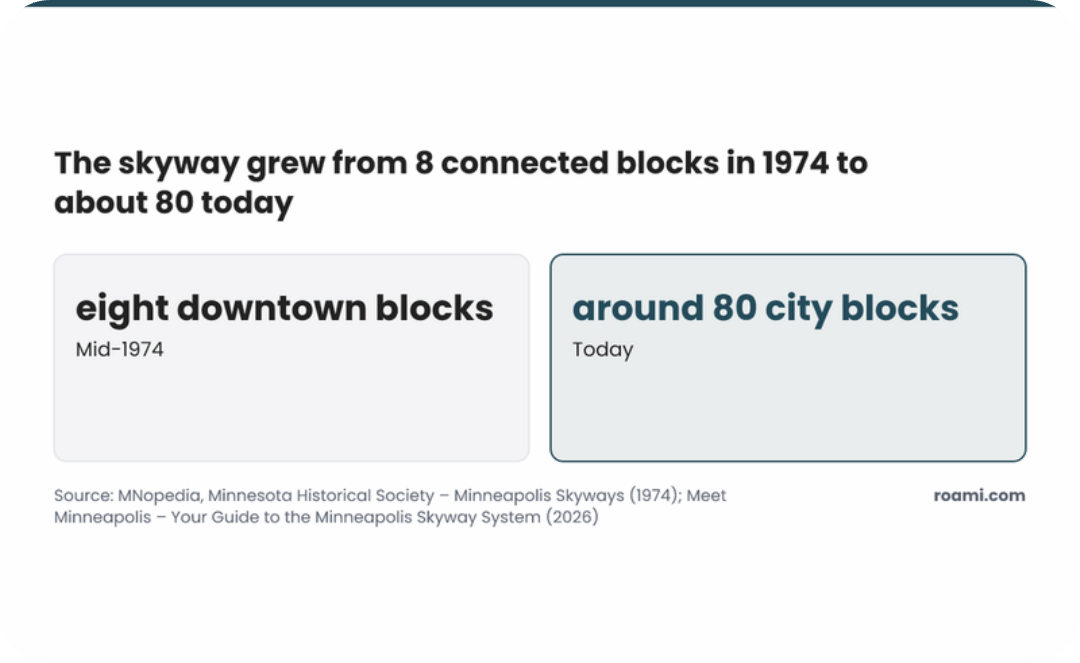
Today the network reaches far beyond its 1974 core. Most of that growth came one building at a time, as owners added their own bridges, which is why the route can feel like a patchwork with no single owner in charge.
What Are the Minneapolis Skyway Hours?
Hours depend on the building. City rules ask buildings to keep their skyways open into the evening on weekdays, but Meet Minneapolis says most skyway-connected buildings keep only weekday business hours and stay closed at weekends. Plan evening and weekend walks with that in mind. Because each skyway is owned by the buildings it connects, Minneapolis skyways do not have uniform opening and closing times, according to Meet Minneapolis. One closed lobby can cut off a route you planned. To see the real hours, check SkywayAccess.com, which lists each building's own skyway hours and notes that they can change at any time.
The rule on paper and daily life in the skyway are furthest apart in the evening. If your group plans to walk to dinner or a show after work hours, check each building on your route, or plan a short walk outside.
Why Aren't the Hours the Same Everywhere?
The city has tried to fix it. Its Minneapolis 2040 plan calls for uniform skyway hours, plus consistent directional signage and accessible skyway maps in multiple languages near entrances. In 2025 the city looked again at enforcing uniform hours. Minneapolis Times reported that the effort produced only an informational staff briefing on September 2, 2025, and public records showed no final ordinance since.
How to Check Before You Go
- SkywayAccess.com: published by Urban Works, which helps coordinate skyway operations for buildings, it has an hours search for each building in the system.
- A live map: Mpls.St.Paul Magazine reported in January 2026 that Skyway.run, launched in late 2025, is a searchable interactive skyway map that aims to show which passageways are open. It's user-powered and draws on OpenStreetMap data, so confirm anything important with the building.
- Posted hours: the hours shown at each building entrance are the final word on the day.
- Weekends: take weekend closures into account and plan short outdoor stretches between the places you want to visit.
How Do You Get into the Skyway and Find Your Way?
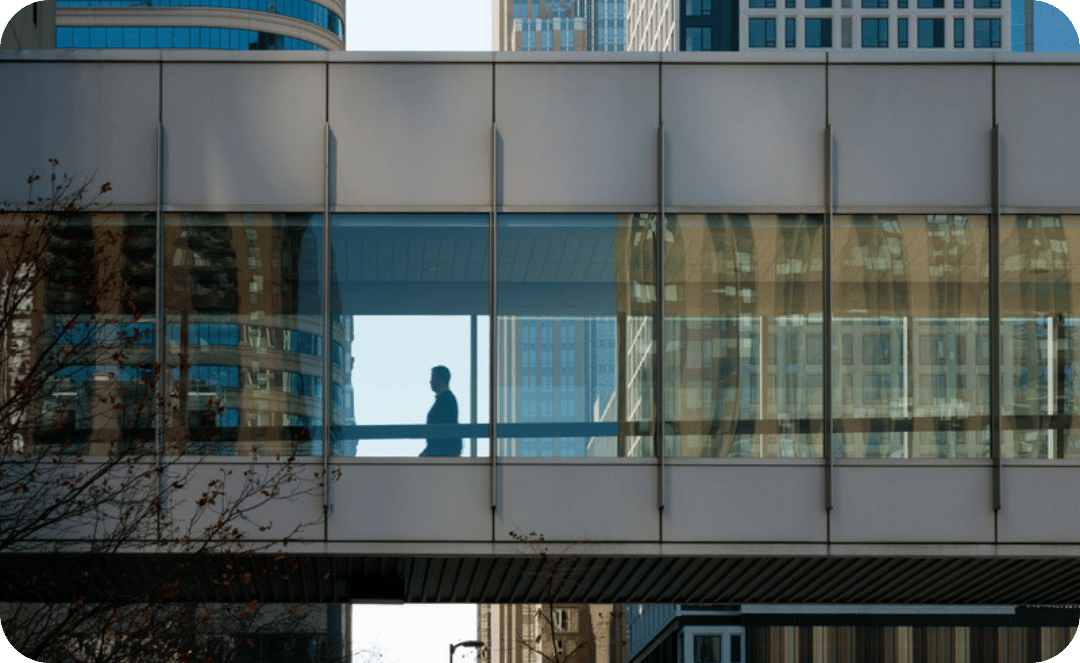
You get into the skyway from the second floor of any connected building. Meet Minneapolis says many downtown elevators have an ‘SK’ button instead of 2, which takes you to the skyway level. After hours, some street-level doors may be locked, so you may need to try another entrance.
Navigation takes practice, because the route turns through lobbies, hallways and atriums instead of running straight. Wayfinding signs and posted maps help at many junctions, but it's easy to get lost on a first visit.
A few habits help groups and families stay together:
- Pick a meeting point, such as the Crystal Court in the IDS Center, which Meet Minneapolis calls the largest open public space in the skyway network. It's an easy place to regroup.
- Share the route and directions with everyone before you set out, so anyone who falls behind can catch up.
- Keep plans flexible: you won't cover the entire system in one outing, so focus on a few blocks around your stops.
What Is There to Do in the Skyway?
There's plenty to explore without going outside. According to Meet Minneapolis, the skyway connects bars, restaurants, hotels, banks, retail, live theaters, three pro sports facilities and art exhibits, so you can eat, shop and see a show on a cold day.
Food options are growing again. Minnesota Monthly reported in October 2026 that 14 new skyway coffee shops and restaurants had opened since January 2026, with more announced.
The mix is changing, too. Axios reported in April 2026 that a downtown retail reset cost the skyway area eight Caribou Coffees and several national chain stores, while independent local businesses fill some of the space. For sit-down meals across town, see our list of must-visit restaurants in Minneapolis.
Each holiday season, the first-level space in the Dayton's building hosts a pop-up market of local vendors and makers, Meet Minneapolis says. It's an easy stop for holiday gifts with the whole family. Runners have a new reason to come, too. The Star Tribune reported in November 2026 that the Skyway 5K indoor race, which started in the Saint Paul skyways, will add a Minneapolis course in 2027.
The skyway is part of local culture. Local band The Replacements sang about it in their song “Skyway.” For downtown residents and office workers, it's simply how people get around in winter. For more ideas indoors and out, browse our guide to things to do in Minneapolis.
Still planning the trip? Read whether Minneapolis is worth visiting and what visitors should know about safety in Minneapolis.
Minneapolis Skyway FAQs
Who Owns the Minneapolis Skyways?
Most Minneapolis skyways are owned by the buildings they connect, not by the city. In a 2025 staff presentation, the City of Minneapolis said it owns 10 skyways, mainly around parking ramps and city-owned buildings. On privately owned skyways, the building owners provide the services.
Are There Public Restrooms in the Minneapolis Skyway?
Public restrooms are hard to find on the skyway level. Meet Minneapolis says free public bathrooms there are rare, and it advises planning ahead. If you're walking with kids, have everyone use the bathroom before you leave your stay, and plan breaks around a meal or café stop where your group can sit down.
Does the Minneapolis Skyway Connect to U.S. Bank Stadium?
Yes, skyways reach U.S. Bank Stadium. Meet Minneapolis says the stadium's skyway links opened in 2016, and it lists three pro sports facilities among the places the system connects. Because each building sets its own hours, check the route on SkywayAccess.com before game day and allow extra time in case a closed building forces a detour outside.
Is the Minneapolis Skyway Busy?
On weekdays, the skyway carries steady office foot traffic. The Star Tribune reported in March 2026 that downtown workday foot traffic on the street and skyway levels had recovered to about 80% of pre-pandemic levels on Tuesdays, Wednesdays and Thursdays, citing Minneapolis Downtown Council president Adam Duininck. Evenings and weekends are much quieter, partly because most buildings close.
Does Saint Paul Have a Skyway Too?
Yes, Saint Paul has its own downtown skyway system, separate from the one in Minneapolis. According to the Star Tribune, the Skyway 5K indoor race began in the Saint Paul skyways in 2026 before adding a Minneapolis course. Roami has stays in both cities, so your group can try each network on a longer Twin Cities trip.
Planning a winter weekend in the Twin Cities with family or friends? Reach out and we'll help you find the right Minneapolis stay for your group.